Composting is easy magic!
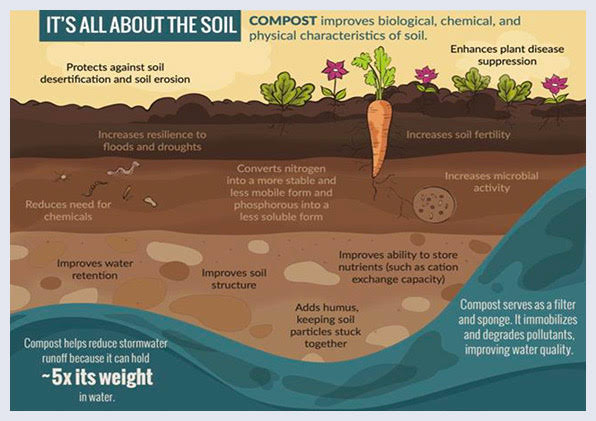
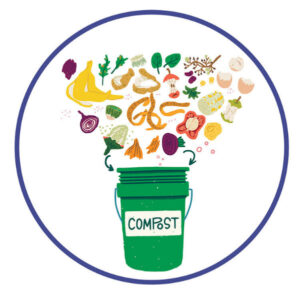
It turns food waste — which might now go into the trash or down the kitchen sink drain via the “garbage disposal” — into a rich, sweet-smelling soil amendment. Applied to garden beds, it enriches the soil environment for plants and for the millions of tiny decomposer organisms that live under our feet. Bonus: it reduces household trash volume significantly!
Why compost?
- It’s magic. It transforms a waste into a productive humus!
- It reduces household waste by up to 50% (and makes the trash bin smell way better).
- It reduces Greenhouse (GHG) emissions. Right now, more than half of the trash that ends up in landfills is compostable organic matter that will eventually generate methane. (Boo; unburned methane is a greenhouse gas on steroids.)
- It means fewer plastic bags. Not only will you use fewer bags, but without organic waste in the trash, paper bags work very well to line the bin. This keeps many plastic bags out of landfills and incinerators.
Can I compost at home?
Absolutely! Composting can happen at home — in a back yard, or on a deck or porch (or even via vermiculture, indoor composting with worms). You can make your own bin (simple to do, and it makes a fun science project for kids), get bins at local retailers, or purchase outdoor compost bins, indoor kitchen scrap bins, and compostable bags by from the Acton Department of Public Works website’s At-Home Compost Bin Program page . You can learn composting basics from the Town’s well organized How to Compost guide or from the folks at the Rodale Institute.
Are there other composting options?
You bet! The Acton Transfer Station offers year-round, on-site bins for the collection of food waste; see more here. One advantage of the Transfer Station compositing program is that it also accepts many more kinds of waste than what you would want to compost at home (i.e., things that attract animals or won’t easily break down, such as raw and cooked meat and cooking oils). See the Transfer Stations’s list of acceptable and unacceptable items. Another option is weekly curbside pick-up of food scraps/organic matter through Black Earth Compost, which is active in many Acton neighborhoods. Both programs offer participants the opportunity for some of the end product — that sweet black gold!