Emissions Benefits of EVs.
In Massachusetts, transportation accounts for 38% of our greenhouse gas emissions. In Acton, carbon emissions from passenger vehicles totaled 74,760 metric tons of carbon dioxide equivalents (MTCO2e) in 2024, according to Acton’s Sustainability Office’s “Greenhouse Gas Inventory” presented in January 2026. Switching to EVs, especially in combination with accessing renewable, carbon-free electricity, can dramatically reduce our greenhouse gas emissions. EVs have lower lifecycle emissions than gas-powered cars, even after accounting for extra emissions from battery manufacturing.
If the electricity used to charge an EV comes from fossil fuels, driving an EV is obviously not entirely emissions free. Still, according to the Union of Concerned Scientists, EVs and plug-in electric-gas hybrids have much smaller carbon footprints than conventional ICE (internal combustion engine) cars — no matter the source of the electricity. (See Are Electric Vehicles Really Better for the Climate? Yes. Here’s Why.)
If you power your EV with only renewable energy, then the only source of emissions comes from the car manufacturing process. Actonians can opt up to Acton Power Choice GREEN to charge their EVs with 100% renewable, Northeast-generated energy.
EVs Have Lower Maintenance and Repair Costs.
There are a lot of great choices on the market right now, from all-electric vehicles to electric–gas hybrids with plug-in options. EVs have great pickup and are less expensive to operate than ICE vehicles. According to the Electric vs. Gas: Is It Cheaper to Drive an EV? article by Natural Resources Defense Council (NRDC), on a per-mile basis, EV maintenance and repair costs run about 40 percent lower than for comparable gas vehicles. EVs have fewer moving parts and are therefore much cheaper to maintain: they do not need oil changes, and have no transmission fluids, fuel pumps, timing belts, exhaust systems, or other typical gas-powered auto parts.
Range Anxiety?
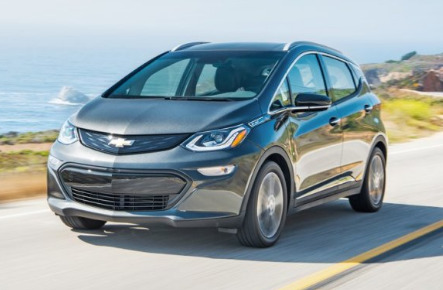
Fully electric vehicles (EV) are constrained by their battery capacity, but battery range is improving by the year. For example, the 2027, highly rated Chevrolet Bolt has a range of about 262 miles. The 2026 Tesla Model 3 has a range of 309-363 miles, depending on the exact model.
Charging Station Networks – Good and Getting Better
The local and national network of charging stations keeps expanding, with many apps that help you locate public charging stations and track availability in real time. Most chargers are located conveniently at transit stops or roadside rest stops; in addition, many parking lots, places of employment, and hotels have also installed chargers. Plugshare is one app that finds charging stations anywhere you are going. EVgo is another, and lists fast-charging stations. ChargeHub is yet another that can help you plan long trips with EV charge stops along the way. ChargePoint offers many stations in the greater Boston area. If you buy a Tesla they own and operate the largest global, fast charging network in the world and reportedly had 2900-3000 Supercharger locations as of 2026. The good news is that Tesla’s Superchargers are now open to some EVs from other automakers, provided those EVs have compatible ports or adapters and must use the Tesla app to unlock the charger.
Ways to Charge an EV.
You can plug your EV into any standard 110-120V outlet (known as Level 1 or “trickle charging,”) which slowly charges your battery. Level 1 charging adds about 2 to 5 miles of range to your battery per hour plugged in. Many EV and plug-in owners opt to install a Level 2 240V charger at home, which speeds up charging time roughly fivefold (about 10 to 20 miles of range per hour plugged in). A Level 2 charger can be installed in a garage or attached to a home or building, close to where the car is parked. For home installation, the charger itself, plus installation by an electrician, may cost approximately $1,000–$1,200. This cost may be tax deductible, and there may be incentives from the state or utilities. The fastest charging option is Level 3 (DC) charging, which uses direct current, and for most EVs, requires a different charging nozzle from the one that works for Level I and Level II charging. Level 3 charges can recharge a near empty battery back to 80% full in 20 minutes to 1 hour (depending on the battery and charger) at rates of up to hundreds of miles of range per hour plugged in. For more information see the Department of Transportation webpage on Charger Types and Speeds.
Public charging locations in Acton as of 2025 consisted of 11 public Level 2 EV charger locations (22 ports) and 2 public Level 3 EV charger locations (2 ports).
Rebates
Qualifying battery electric vehicles (under $55,000) are eligible for a $3,500 Massachusetts rebate. See Massachusetts Offers Rebates for Electric Vehicles (MOR-EV). Unfortunately, Federal tax credits are no longer available and ended in September 2025.
How Important Are Electric Vehicles for Meeting Acton’s Net Zero Carbon Goal?
For most Acton families, switching one car to electric is expected to cut about 2.6 tons (MTCO2e) every year from their carbon footprint (depending on the particular car models before and after the switch, and assuming APC Standard electricity use). Switching 2 cars to electricity beats any other single action.
Better yet, each switch to an EV combined with charging using renewable-power cuts annual carbon emissions about 4 tons, because there’s an additional reduction of about 1.5 tons/year for each EV that’s powered by 100% renewable electricity through APC GREEN. This reduction in carbon emissions is in addition to the 2.6 tons for each EV on APC Standard, and in addition to the 1.5 tons from switching typical household electricity use to APC GREEN!
The Top 6 Actions for Cutting Household Carbon Emissions
| Action |
Average Reduction in Tons of CO2e per
Action per year |
| 1. Switch to Green Heating & Cooling (Air Source Heat Pump) |
3.2 |
| 2. Drive Electric (1 car) |
2.6 |
|
When also Opt Up to APC GREEN for usage by 1 EV
|
1.5 |
| 3. Install Solar on Your Roof |
(2.5) |
| 4. Insulate & Weatherize to the Max |
1.5 |
| 5. Opt Up to APC GREEN for average household usage |
1.5 |
|
When also Opt Up to APC GREEN for heat pump usage
|
2.0 |
| 6. Eat Less Meat and Dairy |
0.6 |
Sources: MassEnergize Carbon Calculator Methodology, Energize Acton conversions to metric tons based on 2204.62 pounds/metric ton.
Each EV will likely reduce your carbon emissions more than rooftop solar (2.5 tons) or insulation (1.5 tons for “Insulating to the Max”) or a more planet-friendly diet (approximately 0.6 tons). Reductions will vary from family to family depending on their situations, but if a family can do all 6 things in this table, they would eliminate approximately 13 tons of carbon from their emissions each year. That’s eliminating roughly 74% of the average 17.5 tons of emissions per household counted in the 2019 Acton Greenhouse Gas Inventory from home energy use and “passenger” cars in Acton. (Note: rooftop solar was omitted from the 13 ton total because most of solar’s potential emission reduction is achieved in this scenario by APC GREEN.)
What is the Basis for the Estimate of 2.6 tons/year Emissions Reduction?
This estimate of emissions reduction is intended as an approximation of typical, average, or potential results in order to convey relative magnitudes of various Actions; this is not a prediction of actual results of individual EV purchases. According to MassEnergize Carbon Calculator Methodology, MassEnergize estimated 5,820 pounds/year reduction by (1) assuming that the car being replaced was getting 20.843 miles per gallon (MPG) (the 2014 average for passenger cars in Massachusetts, according to Metropolitan Area Planning Council’s (MAPC’s) Vehicle State Summary Statistics) and (2) modeling the EV being purchased as a weighted average of an all-electric BEV (battery electric vehicle) and a plug-in hybrid (PHEV), using 2016 average electricity use per mile of 0.320 kWh for US all-electric vehicles, 0.367 kWh/mile for PHEVs, and, for PHEVs, 37.9 MPG when not using electricity (source: Alternative Fuels Data Center). MassEnergize uses an electricity emission factor of 580 Lb/MWh from MassDEP. Energize Acton converted to metric tons using 2204.62 pounds/metric ton.
Last Updated 3/10/26