What is a Heat Pump?
Heat pumps are amazing electrical HVAC (Heating Ventilation Air Conditioning) devices that both warm and cool your home and function like a combined furnace and central air conditioner while also reducing your household’s overall carbon footprint! Heat pumps are exceptionally energy-efficient and environmentally friendly compared with other home heating and cooling systems, because they absorb and move heat from the air (or the ground) and don’t have to create the heat (e.g., no burning oil or gas or using resistive electrical heating). This makes them significantly more energy-efficient than traditional furnaces or boilers. They can be used to heat and cool part or all of your home and you can also get separate units to provide your house’s hot water.
How Do They Work?
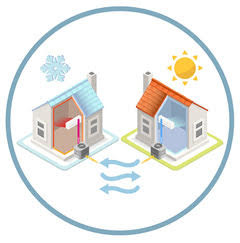
Heat pumps are similar to refrigerators and air conditioners because they use a refrigeration cycle involving a chemical refrigerant to absorb and release heat energy and are designed to both cool and heat.
- Heating: In winter, the outdoor unit extracts heat from the outside air or ground (even in sub freezing temperatures!). The refrigerant absorbs this energy, is pressurized by a compressor to increase its temperature, and then releases that heat into your home via an indoor unit.
- Cooling: In summer, the system acts like an air conditioner. It reverses the flow of refrigerant using a reversing valve, pulling heat from inside your home and dumping it outdoors to cool your space. In cooling mode, like for air conditioners, heat pumps will also act to dehumidify the air.
There are two main types of heat pumps when it comes to how the outdoor energy exchange happens:
- Air-Source Heat Pumps (ASHPs) that transfer heat between the indoor air and the outside air. These are very common and easy to install. Mini-splits systems are one example, ducted systems like the one below are another.
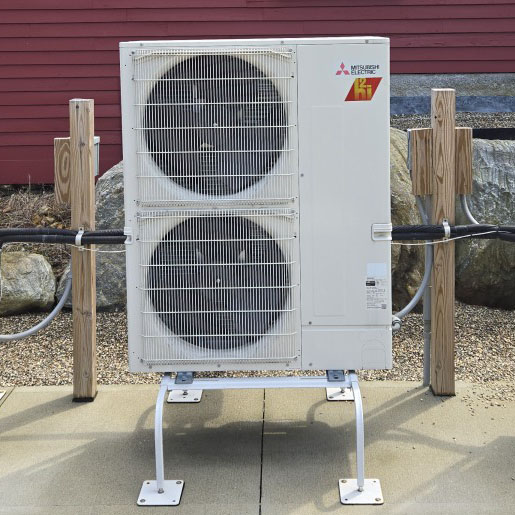
This is an air-source heat pump’s external condenser (heat exchanger) capable of heating and air conditioning an entire house. It connects to interior air handlers and air ducts. - Geothermal (Ground-Source) Heat Pumps that transfer heat between a building and the ground. These systems involve drilling a well and/or burying piping in the ground and so are more complicated to install and less common, but they are the most efficient type of heat pump system.
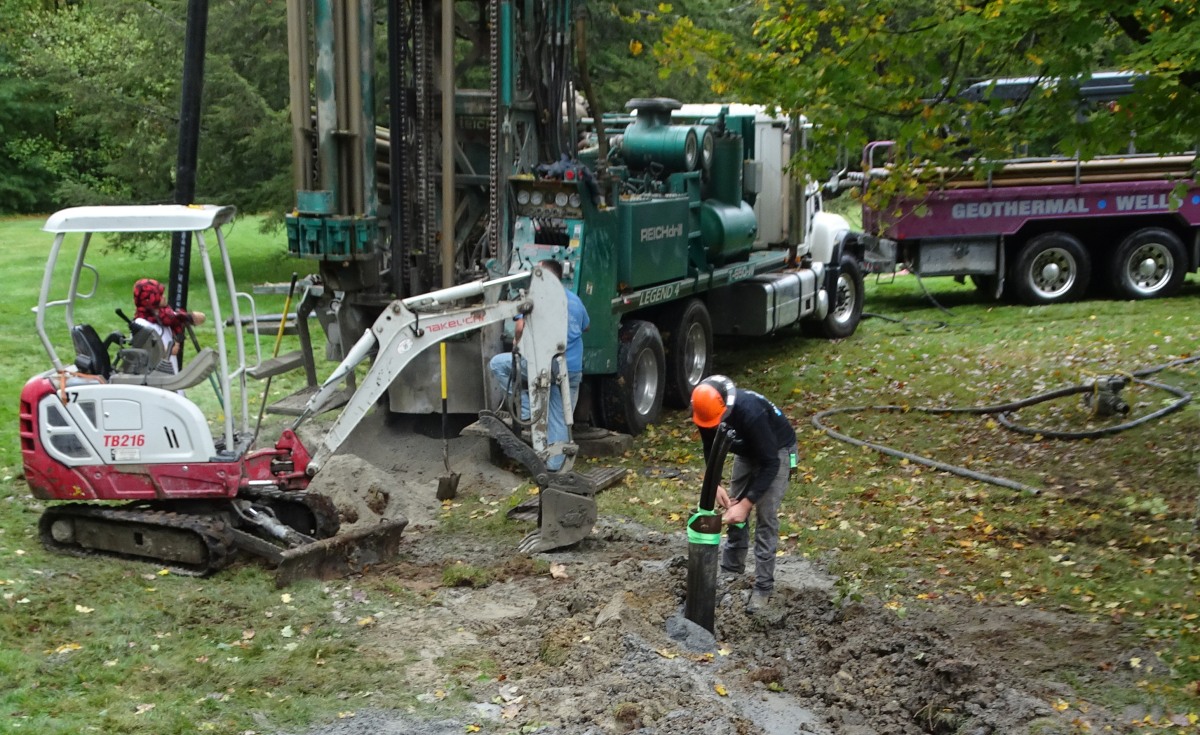
Geothermal heat pumps can heat and cool a home. They obtain heat from or dissipate heat to the ground using circulation pipes that go from the ground into the home. The photo shows drilling of wells to install the circulation pipes.
Why Use Heat Pumps?
One of the most effective ways to reduce a household’s overall carbon footprint is to electrify the home’s heating — and cooling — with a heat pump system. Anyone who lives or has a business (or other concern) in Acton can contact a volunteer Acton Clean Energy Coach (using this Coaching Request Form) and they will help you understand heat pump technology for heating and cooling (and for hot water heating), available rebates, and answer any other questions you might have. Every house is unique. So when you are ready, a coach can also look at the specifics of your house in order to consider what type of system might work best for you.
To see a short video from a homeowner in Acton who has installed two types of heat pumps and gone fossil fuel free, click on this link Virtual Carbon Free House Tour.
When To Make The Change
Ideal times to install a heat pump include:
• when you need to replace your existing heating or cooling system;
• when you want to add air conditioning (because heat pumps provide cooling as well as heating); and
• when you are installing on-site solar (because it can offset the heat pump’s electrical use).
The exciting news is that heat pump technology has advanced rapidly, and there are plenty of options to meet your comfort needs efficiently in both summer and winter. Planning ahead is important!
Impact
Average household carbon emissions will be reduced by approximately 2–3 tons annually with full conversion to a heat pump system from an existing fossil fuel system — depending on the size of the home and the nature of the existing heating system, as explained in the Deep Dive tab.
Financial And Other Benefits
If you’re switching from an oil heat system, or adding central air conditioning to your home, you might see immediate financial savings by switching to a heat pump system. If you currently burn natural gas, it’s possible that the switch to a heat pump system might result in a small increase in cost to operate, given current, relatively low “natural” gas prices — unless you generate on-site solar electricity, which will reduce what’s needed from the grid. (That said, gas prices are expected to rise in the longer term.) Nevertheless, you may find that a heat pump system is an affordable way to cut carbon emissions substantially right away. As gas prices rise, heat pumps are expected to become cheaper alternatives to natural gas. Other important climate and health benefits of electric heat pump systems include reductions in:
- the routine release of methane (and other products of combustion) inside your home,
- the risk of dangerous gas leaks, and
- carbon and methane emissions being released into the atmosphere.
(See the separate Switch to Induction Cooking Action for information on eliminating gas from your kitchen.)
Make A Plan
A more-gradual way to get started with heat pumps and reduce the fossil fuel you burn is to make the switch for only one or two rooms in your home. You can do this by having a “mini-split” heat pump system installed that covers those rooms, while the existing system heats the rest of the home. A great “target” for this strategy is any room(s) or area(s) that tend to be uncomfortably cool or warm, depending on season.
Start by developing a “Heat Pump Plan” before your existing heating system needs to be replaced. An Acton Clean Energy Coach can help you create a plan and all consultations are free. See our action, “Create a Zero Emissions Plan,” for suggested checklists and formats to help with planning. Because choosing an installer and equipment can be a time consuming and confusing process, waiting until you are out of heat in the winter to start researching heat pump options can potentially result in choices that are not fully informed. By developing a plan in advance, you will have time to consult with your current HVAC dealer or to find a new heat pump installer.
Incentives
There are several incentive programs for heat pumps to sweeten the deal. State incentives, and point-of-sale rebates, can be significant for homeowners! Some programs can mix and match for additional savings. Massachusetts has some of the best renewable energy promotions in the country including rebate structures that aim to support lower income households, non-profit organizations, and municipalities. Below please see the information related to heat pump incentives as of January 2026, but check to see if they have changed since.
MASSACHUSETTS PROGRAMS
Mass Save Programs This site includes everything related to heat pumps and energy efficiency, but you must be a traditional utility customer; that is, municipal electricity customers–Concord, Littleton, etc.–do not qualify.
Mass Save HEAT Loan 0% financing for 5-7 years. – Up to $25,000
Air Source Heat Pumps (ASHPs) rebates for Mass Energize qualified products
- Whole home conversion – $2,650 per ton. Up to $8,500 total
- Partial home conversion – $1,125 per ton. Up to $8,500 total
- Basic – $250 per ton. Up to $2500 total
- Income based enhanced incentives – up to $16,000 or up to no cost through Turnkey Services.
Air to Water Heat Pumps rebates for Mass Energize qualified products
- Whole home conversion – $2,650 per ton. Up to $8,500
- Income-based enhanced amount – up to $16,000
Ground Source Heat Pumps (GSHPs) rebates for ENERGY STAR certified products.
- Whole home conversion – $13,500 per home
- Partial home conversion – $2000 per ton. Up to $13,500 total
- Income-based enhanced amount (whole or partial-home) – up to $25,000
Heat Pump Water Heaters rebates for certain ENERGY STAR certified products.
- $750 per unit
- $1500 for a split system heat pump water heater (i.e., where the condenser is outside of house)
For eligibility, most of these incentives REQUIRE A HOME ENERGY AUDIT from MassSave!
Plus, you should do everything you can to add the maximum insulation and reduce drafts significantly. To get started with this, sign up for a no-cost Home Energy Assessment and also go to the Insulate and Weatherize to the Max Action).
FEDERAL PROGRAMS
There are no longer any federal tax credits for residential clean energy investments. While originally extended through 2034 by the 2022 Inflation Reduction Act, the “One Big Beautiful Bill” enacted in July 2025 rolled back its expiration date to the end of 2025.
For more information, see the Steps to Take and Deep Dive tabs.